China's economy resilient with potential and vitality-每日视讯
SHI YUMENG/FOR CHINA DAILY
Editor"s note: The Chinese economy has strong resilience, great potential and is full of vitality. With the optimization of the COVID-19 management measures, the country"s overall economic performance is expected to pick up in 2023, with the economic growth rate back to reasonable range. Three experts share their views on the issue with China Daily.
Nation reaffirms pro-growth stance
 (相关资料图)
By Ding Shuang
The annual session of the National People"s Congress, which started on Sunday, has reaffirmed Chinese policymakers" pro-growth stance set at the Central Economic Work Conference in December. In light of China"s disappointing economic performance due to the strict COVID-19 restrictions, the CEWC had called for an "overall improvement" of the economy, starting with making efforts to improve expectations and boost confidence. In this context, we (at Standard Chartered Bank) had expected the government to set reasonable as well as ambitious economic targets to stabilize market expectations.
This year, the growth target is around 5 percent. Last year, China"s GDP grew by only 3 percent, undershooting the target of 5.5 percent by a big margin. That"s why local governments have adopted more ambitious growth targets for 2023, ranging from 4.0-9.5 percent and averaging 6 percent.
The inflation target is around 3 percent (annual average). Consumer price index inflation averaged 2.0 percent in 2022, and we forecast a moderate rise to 2.3 percent this year, much below the target even after assuming a significant increase in service prices on reopening.
The unemployment rate target is maintained at 5.5 percent. In addition, the government has pledged to create 12 million new jobs during the year. And if the recovery remains on track, these targets should be within reach, although lowering the youth unemployment rate (16.7 percent in December 2022) will be more challenging, in our view, given an increase in college graduates to about 11.5 million this year.
In 2022, the government had to under-implement spending to meet the broad budget deficit target of 7.4 percent of GDP, because of revenue shortfalls. The combined total revenue from the general public budget and government funds budget dropped 6.3 percent (relative to a budgeted increase of 8.2 percent) because of a 23 percent plunge in land sales revenue, tax refunds and a slower economy.
Spending increased by only 3.1 percent compared with the budgeted expansion of 15.6 percent, and the government appears to have deployed all available resources, according to our estimate, including general bond proceeds of 3.37 trillion yuan ($490.59 billion) and local special bond proceeds of 4.15 trillion yuan.
This year the official budget deficit (covering only general public budget) is widened to 3 percent of GDP from 2.8 percent last year, but the broad deficit (also covering government funds budget) is likely to be scaled back. In December, the CEWC called on the government to "maintain necessary spending intensity while making the fiscal position sustainable and local government debt controllable". The 2023 budget points to the government intention to provide adequate support to boost growth while maintaining fiscal sustainability.
Under the general public budget, the focus of fiscal support this year appears to have shifted to expanding spending, versus tax cuts in 2022. In addition, the central government may ramp up transfers to local governments to increase their spending capacity without adding to their debt burden.
Under the government funds budget, the local special bond issuance quota is set at 3.8 trillion yuan (slightly below 3 percent of GDP), higher than the original 2022 quota of 3.65 trillion yuan but lower than the augmented quota of 4.15 trillion yuan.
While the broad deficit is likely to be smaller than in 2022, we think fiscal policy will become more effective in supporting economic activity, and the expected revenue recovery would allow total spending to grow faster in 2023.
Besides, quasi-fiscal operations by policy banks may be increased, if necessary, to finance key projects.
The government is likely to tackle the problem of local hidden debt (including that of local government financing vehicles, LGFVs) by asset disposal and/or the issuance of refinancing bonds, with restructuring also likely.
The monetary policy tone is consistent with the CEWC"s message, aimed at "keeping money and credit growth in line with nominal GDP". We expect monetary policy to remain accommodative in the first half of this year, with reserve requirement ratio (RRR) cut likely in the second quarter of the year.
However, policy may turn neutral in the second half of this year when the recovery gains traction. The People"s Bank of China may guide total social financing growth to slightly below 10 percent to stabilize the total debt-to-GDP ratio.
The Government Work Report reiterated support for meeting the basic housing demand, and upgrading demand, as well as improving the balance-sheet position of high-quality large housing developers. Moreover, we expect the government to continue to prioritize job creation, including by normalizing the regulation of internet platforms, encouraging the expansion of private business, and attracting and retaining foreign direct investment.
The author is chief economist of Standard Chartered Bank for Greater China and North Asia. The views don"t necessarily represent those of China Daily.
Chinese recovery won"t be inflationary
By Chetan Ahya
The universal experience of re-opening an economy is a rise in inflation. What has been different across economies is the extent of the rise in inflation and its persistence. China"s "reopening" has given rise to some natural questions: By how much will inflation rise in China? How persistent will it be? Will there be any significant spillover effects on the rest of Asian economies?
On Sunday, the Government Work Report set a GDP growth target of around 5 percent.
We (at Morgan Stanley) are more bullish than the consensus in expecting GDP growth to pick up to 5.7 percent in 2023. Yet, we also expect just a moderate uplift in China"s core inflation, and headline inflation will remain well within the comfort zone of 3 percent because food prices continue to exert downward pressure.
This view is informed by the following perspectives.
As the economy continues to "re-open" at a brisk pace, final consumption expenditure growth will accelerate. Within consumption, the acceleration will be driven more by an increase in spending on services as the continued relaxation in COVID-19 restrictions fueled the service sector"s recovery. The services-led nature of the recovery means that goods translate to a relatively mild boost to goods prices and the non-commodity producer price index (PPI) given that the incremental demand will be driven more by services than goods.
There are concerns over China"s consumption recovery and the reflation story potentially playing out like it did in the United States. However, the key difference is that the demand for goods in the US saw a significant rise because of the excess transfers to households, coupled with the fact that some restrictions were still in place in the US then.
Consumption growth in China too will be driven, to a certain extent, by excess household savings. But the excess savings have accumulated largely due to people"s inability to spend amid prolonged, strict COVID-19 restrictions and precautionary savings because of the deteriorating labor market conditions, rather than from transfers.
Furthermore, manufacturing capacity utilization ratios fell in 2022, and we believe there will be room for them to pick up before they get to a point where there will be significant upward pressures on goods inflation.
The fact that we expect recovery in China means unemployment rates will decline while wage growth will pick up from a cyclical perspective. However, as labor market dynamics have not been distorted by excessive transfers, we don"t see labor participation rates being held back as the recovery progresses.
Moreover, the ongoing slowdown in exports will also help to cap overheating pressures in the labor market as hiring trends would be slowing in the manufacturing sector.
As for the spillover effects on the rest of Asia, we think that two transmission channels matter the most.
First, an increase in demand from China would raise oil and non-oil commodity prices. For oil prices, the key will be the extent of the improvement in mobility and international travel. But the impact will be mitigated by a more subdued backdrop for industrial and construction activity. For non-oil commodities, the outlook for infrastructure and property spending is key as they are the main sources of demand, and we expect only a moderate improvement in combined spending growth in the infrastructure and property sectors this year.
In past cycles, investments helped drive China"s recovery in the initial parts. This led to pronounced spillover effects as the capex-led recovery accelerated the rise in commodity demand and prices. The recovery in investment, however, is more moderate in this cycle.
While policymakers have initiated policy easing to boost infrastructure spending as they usually did during past cycles, a key difference is how the demand for commodities from the property sector is faring. Policymakers are now trying to stabilize the housing market, seeking to improve liquidity conditions of developers and relax the purchase restrictions which were imposed when the market was overheating.
As for infrastructure, we expect the policymakers to counter-cyclically reduce the increase in infrastructure spending given the need to conserve fiscal space. The overall fixed asset investment growth will increase to 4.5 percent in 2023 from 2.4 percent in 2022. Within that what matters most for the non-oil commodity demand is the expenditure on infrastructure, which is expected to rise from 0.7 percent in 2022 to 2.8 percent this year.
Second, since China is the largest supplier of goods to the rest of Asia, inflation pressures may pass from China"s goods prices to the region"s import prices and further to its consumer price index. But what matters more is the global goods demand/supply balance. And the still deflating global goods demand will further limit any spillover effects on the region"s inflation.
We expect disinflation to continue in Asian economies. Our base-case forecasts are more dovish than those projected by others as we believe that inflation for 90 percent of the economies in Asia would have returned to the central banks" comfort zones by the middle of the year.
The author is chief Asia economist, Morgan Stanley. The views don"t necessarily reflect those of China Daily.
China"s rebound will be positive for world economy, offset Fed risks
By Dan Steinbock
When Chinese policymakers began preparing for the re-opening, many international observers warned it would unleash inflationary headwinds. This was their assumption: As the world"s biggest factory and the second-largest economy re-opens for business after three years of COVID-19 pandemic restrictions, it will have to cope with a surge in demand. That, in turn, would trigger global inflationary pressures as in the United States and the European Union, which have been struggling with elevated inflation since their re-opening.
There"s only one problem with the story. Numbers do not back it up.
The US" annual inflation rate, which had soared close to 10 percent in summer last year, slowed, but slightly, to 6.4 percent in January, although the interest rate has been hiked to almost 5 percent.
In the eurozone, the situation was worse as inflation remained 8.5 percent in February 2023 after peaking at 11.1 percent in November. Meanwhile, policymakers have raised interest rates to 15-year highs to bring euro area inflation under control. Markets expect a 0.5 percentage point increase this month up to 3.5 percent, with a chance of a similar hike to be delivered in May.
Even in Japan, where inflation was actually negative until the fall of 2021, it rapidly soared to 4.3 percent in January 2023, and continues to rise. As a result, Japanese central bank"s new chief Kazuo Ueda is likely to raise the interest rate over time.
Despite the media hysteria in the West, China"s annual inflation rate rose to only 2.1 percent in January. And as expected, prices of food jumped and those of non-food gained further on the back of the Lunar New Year and the lifting of the strict pandemic prevention and control measures.
But the inflation rate was only half relative to Japan, a third compared with the US and a fourth compared with the eurozone.
After US" self-defeating trade wars, a pandemic-induced economic slowdown, an unwarranted proxy war, US efforts at another Cold War, and a series of energy and food crises, the global economy has been further penalized by the US Federal Reserve"s ill-advised monetary policies, particularly since the fall of 2021.
After years of easy money and rounds of quantitative easing, the Fed misread the market signals after mid-2021, when inflation started to rapidly climb up and Fed chairman Jerome Powell downplayed the threat of soaring prices by calling them "transitionary".
Over a year ago, I had warned that inflation in the US could pose a risk to the global economy in 2022. Indeed, due to the belated monetary response, the ensuing risks penalized the ailing global recovery. In February 2022, after the disastrous failure of international diplomacy to end the Russia-Ukraine conflict and the onset of the US-NATO-led proxy war against Russia in Ukraine, I predicted the world economy would have to cope with the risk of stagflationary recession, compounded by energy and food inflation and the consequent cost-of-living crises.
The Fed raised the interest rate to 4.5-4.75 percent in its February 2023 meeting, still pushing borrowing costs to the highest since 2007. Recently, Fed Chairman Jerome Powell warned of more rate hikes and seems to be aiming at 5.25 to 5.5 percent, thus flirting with a recession.
Since the Central Economic Work Conference in December, Chinese policymakers have been stimulating private sector growth by taking measures to accelerate domestic demand and deepen regional and international trade and investment. They have also implemented a variety of measures to expand consumption, though the momentum is on the supply side, particularly infrastructure.
Already on the eve of the Two Sessions, Chinese leaders pledged stronger growth, and recovery is taking hold as economic activity picks up pace due to China"s re-opening. Thanks to the recovery potential and despite the dismal first quarter, China"s GDP growth could soar to 5.5-6 percent in 2023, or more than 6 percent on a quarter-to-quarter basis.
Ironically, external risks have been in part reduced by the misguided US trade wars and protectionism, which have compelled Chinese policymakers to stress the importance of self-sufficiency. Internally, the emphasis on social policies is meant to help increase the purchasing power of the new middle-income groups, without the kind of economic polarization that four decades of neoliberal policies have caused in the West.
Since the recovery will be demand-led, the spillovers will center on consumption and services in China. In addition to domestic demand, the recovery will also have an impact on global growth through commodity demand and travel, while the recovery in outbound tourism will be key to regional, and neighboring, economies" recovery. The global effect is already discernible in commodity prices. As the recovery broadens, oil and metals will follow.
However, spillovers will be significant in those economies that are part of the Regional Comprehensive Economic Partnership, the vast new trade bloc, and those participating in the huge Belt and Road Initiative.
Unlike the US, the eurozone and Japan, which are struggling with secular stagnation and exporting runaway inflation, China"s growth is accelerating while inflation remains in check. The reopening could lift global GDP by an impressive 1 percent in 2023. In brief, China"s rebound will be positive for the world and offset the Fed risks.
The author is the founder of Difference Group and has served at the India, China and America Institute (USA), Shanghai Institutes for International Studies (China) and the EU Center (Singapore). The views don"t necessarily reflect those of China Daily.
免责声明:本文不构成任何商业建议,投资有风险,选择需谨慎!本站发布的图文一切为分享交流,传播正能量,此文不保证数据的准确性,内容仅供参考
-
China's economy resilient with potential and vitality-每日视讯
SHIYUMENG FORCHINADAILYEditor snote:TheChineseeconomyhasstrongresilien
-
 多管齐下筑牢就业蓄水池-世界新消息
突出做好稳就业工作,是2023年政府工作报告的一个重要着力点。作为最大的民生工程、民心工程、根基工程,就业是事关每一个家庭的头等民生大事
多管齐下筑牢就业蓄水池-世界新消息
突出做好稳就业工作,是2023年政府工作报告的一个重要着力点。作为最大的民生工程、民心工程、根基工程,就业是事关每一个家庭的头等民生大事
-
 Foreign Correspondents Club of China shows its prejudice-焦点报道
AlmostamonthhaspassedsincePulitzerPrize-winningjournalistSeymourHersh
Foreign Correspondents Club of China shows its prejudice-焦点报道
AlmostamonthhaspassedsincePulitzerPrize-winningjournalistSeymourHersh
-
 新漫评:美国“毒列车”释放治理之毒
今年2月初,美国俄亥俄州东巴勒斯坦城发生列车脱轨事故,导致多种有毒化学物质泄漏。尽管美国政府部门不断声称对当地空气和水的检测没有...
新漫评:美国“毒列车”释放治理之毒
今年2月初,美国俄亥俄州东巴勒斯坦城发生列车脱轨事故,导致多种有毒化学物质泄漏。尽管美国政府部门不断声称对当地空气和水的检测没有...
-
 美焚烧“毒列车”污染土壤引担忧,美前官员:计划“令人震惊”-天天播资讯
【环球时报综合报道】美国俄亥俄州列车脱轨事故风波又起,英国《卫报》4日报道称,诺福克南方铁路公司、俄亥俄州州政府和联邦政府正将东...
美焚烧“毒列车”污染土壤引担忧,美前官员:计划“令人震惊”-天天播资讯
【环球时报综合报道】美国俄亥俄州列车脱轨事故风波又起,英国《卫报》4日报道称,诺福克南方铁路公司、俄亥俄州州政府和联邦政府正将东...
-
 微纪录·代表说|刘建明:花香共富路 乡村焕新颜-当前报道
“春天到了,这里能看到遍地的兰花,可美了!”全国人大代表、浙江省绍兴市柯桥区漓渚镇棠棣村党总支书记、村委会主任刘建明见到记者时...
微纪录·代表说|刘建明:花香共富路 乡村焕新颜-当前报道
“春天到了,这里能看到遍地的兰花,可美了!”全国人大代表、浙江省绍兴市柯桥区漓渚镇棠棣村党总支书记、村委会主任刘建明见到记者时...
-
 创意视频|中国向上up!
今年是全面贯彻党的二十大精神的开局之年跟随这条线打开政府工作报告向着2023年的发展目标踔厉奋发,不懈努力你我向前,中国向上!一起upupup!
创意视频|中国向上up!
今年是全面贯彻党的二十大精神的开局之年跟随这条线打开政府工作报告向着2023年的发展目标踔厉奋发,不懈努力你我向前,中国向上!一起upupup!
-
 彻查“北溪”事件,西方多国仍在躲闪!-环球要闻
【环球时报综合报道】尽管美国和西方对于“北溪”天然气管道爆炸的调查一直躲躲闪闪,西方多数媒体也对相关爆料保持沉默,不过包括西方...
彻查“北溪”事件,西方多国仍在躲闪!-环球要闻
【环球时报综合报道】尽管美国和西方对于“北溪”天然气管道爆炸的调查一直躲躲闪闪,西方多数媒体也对相关爆料保持沉默,不过包括西方...
-
 拜登认为他的“民主圣战”将轻松赢得胜利,可惜他错了-天天精选
英国《卫报》网站2月26日刊登题为《过时且不合时宜:拜登的全球民主圣战注定失败》的文章,作者是西蒙·蒂斯德尔。全文摘编如下:这是美...
拜登认为他的“民主圣战”将轻松赢得胜利,可惜他错了-天天精选
英国《卫报》网站2月26日刊登题为《过时且不合时宜:拜登的全球民主圣战注定失败》的文章,作者是西蒙·蒂斯德尔。全文摘编如下:这是美...
-
 【科技前沿】聚合物电工绝缘材料研究获重大突破-焦点热讯
在航空电子、汽车工业、地下油气勘探和高级推进系统等众多高功率、高电流和高温应用领域,对介电电容器的高温能力有着迫切需求。2日,国...
【科技前沿】聚合物电工绝缘材料研究获重大突破-焦点热讯
在航空电子、汽车工业、地下油气勘探和高级推进系统等众多高功率、高电流和高温应用领域,对介电电容器的高温能力有着迫切需求。2日,国...
相关内容
- 当日快讯:丰立智能:目前新能源汽车和谐波减速器有小批量订单
- China's economy resilient with potential and vitality-每日视讯
- 多管齐下筑牢就业蓄水池-世界新消息
- Foreign Correspondents Club of China shows its prejudice-焦点报道
- 当日快讯:泸州老窖 北方华创等18股获北向资金增持额超亿元
- 当日快讯:患者住院15天必须出院 国家医保局:对住院天数无限制
- 千方百计守护好我国的“粮袋子”-环球实时
- 打通养老机构医护人员职业晋升通道-天天即时看
- 北京住总拟3月12日对“19住总03”付息,利率为2.97%-快播
- 韩国公布二战劳工问题赔偿方案:第三方代偿-环球播报
- 新漫评:美国“毒列车”释放治理之毒
- 美焚烧“毒列车”污染土壤引担忧,美前官员:计划“令人震惊”-天天播资讯
- 微纪录·代表说|刘建明:花香共富路 乡村焕新颜-当前报道
- 创意视频|中国向上up!
- 彻查“北溪”事件,西方多国仍在躲闪!-环球要闻
- 提前还贷的人能有多拼是什么情况 提前还贷的人能有多拼具体来龙去脉是怎么样-全球快播报
- 创意视频|中国向上up!
- 高速护坡惊现马群 交警及时驱赶除隐患-天天报资讯
- 光彩事业促进会工作总结_光彩事业是什么
- 国家发改委:猪粮比价回升至二级预警区间-观速讯
热门资讯
-
China's economy resilient with potential and vitality-每日视讯
SHIYUMENG FORCHINADAILYEditor ...
-
Foreign Correspondents Club of China shows its prejudice-焦点报道
AlmostamonthhaspassedsincePulitz...
-
多管齐下筑牢就业蓄水池-世界新消息
突出做好稳就业工作,是2023年政府...
-
新漫评:美国“毒列车”释放治理之毒
今年2月初,美国俄亥俄州东巴勒斯...
-
创意视频|中国向上up!
今年是全面贯彻党的二十大精神的开...
-
 韩国公布二战劳工问题赔偿方案:第三方代偿-环球播报
当地时间3月6日,韩国政府公布以第...
韩国公布二战劳工问题赔偿方案:第三方代偿-环球播报
当地时间3月6日,韩国政府公布以第...
-
美焚烧“毒列车”污染土壤引担忧,美前官员:计划“令人震惊”-天天播资讯
【环球时报综合报道】美国俄亥俄州...
-
微纪录·代表说|刘建明:花香共富路 乡村焕新颜-当前报道
“春天到了,这里能看到遍地的兰花...
-
彻查“北溪”事件,西方多国仍在躲闪!-环球要闻
【环球时报综合报道】尽管美国和西...
-
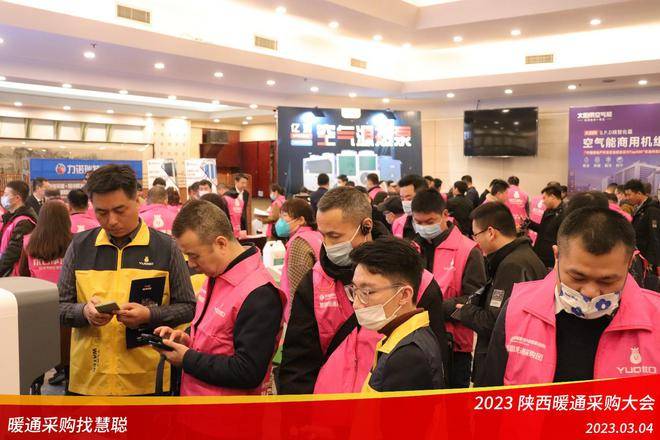 热情难挡!2023陕西暖通采购大会圆满举办!
2023年3月4日,由慧聪暖通与舒适家...
热情难挡!2023陕西暖通采购大会圆满举办!
2023年3月4日,由慧聪暖通与舒适家...
-
 刘靖任邯郸市委副书记-天天看点
中国经济网邯郸3月6日综合报道据河...
刘靖任邯郸市委副书记-天天看点
中国经济网邯郸3月6日综合报道据河...
-
 江西南昌:“小桔灯”点亮凡人微光-天天消息
“小桔灯”服务社的志愿者在南昌市...
江西南昌:“小桔灯”点亮凡人微光-天天消息
“小桔灯”服务社的志愿者在南昌市...
-
 国家发改委:猪粮比价回升至二级预警区间-观速讯
据国家发展改革委监测,2月27日—3...
国家发改委:猪粮比价回升至二级预警区间-观速讯
据国家发展改革委监测,2月27日—3...
-
拜登认为他的“民主圣战”将轻松赢得胜利,可惜他错了-天天精选
英国《卫报》网站2月26日刊登题为...
-
 提升自我价值感 有效缓解职场焦虑
近年来,随着互联网的快速发展和科...
提升自我价值感 有效缓解职场焦虑
近年来,随着互联网的快速发展和科...
文章排行
最新图文
-
彻查“北溪”事件,西方多国仍在躲闪!-环球要闻
【环球时报综合报道】尽管美国和西...
-
拜登认为他的“民主圣战”将轻松赢得胜利,可惜他错了-天天精选
英国《卫报》网站2月26日刊登题为...
-
【科技前沿】聚合物电工绝缘材料研究获重大突破-焦点热讯
在航空电子、汽车工业、地下油气勘...
-
 “北斗”卫星定位+“无人驾驶”插秧 春耕科技力量来了-今日热闻
记者从农业农村部了解到,预计今春...
“北斗”卫星定位+“无人驾驶”插秧 春耕科技力量来了-今日热闻
记者从农业农村部了解到,预计今春...